
The Majority of Germans Is No Longer Religious
A current fowid study illustrates how far secularization has progressed
frerk_fowid_tagung_2025_1.jpg
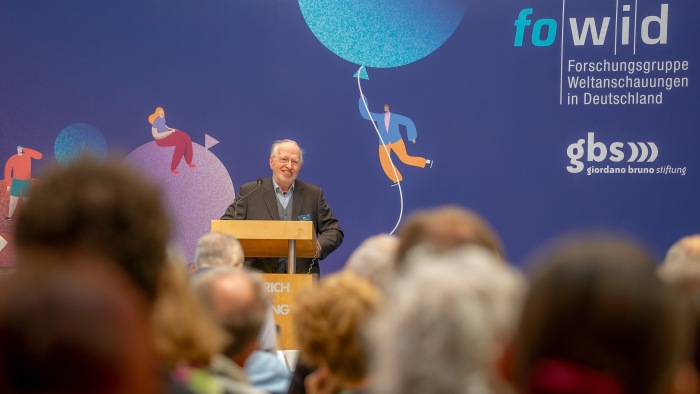
fowid director Carsten Frerk during the opening lecture of the conference »Auf dem Weg in die säkulare Gesellschaft« (On the Way to a Secular Society) (Photo: R. Hinz)
84 percent of Germans hold the view that politicians should "make decisions in a worldview-neutral manner," 76 percent agree with the conviction that ethical-moral decisions should be based "on reason and compassion," "not on divine commandments." This is the finding of a representative survey that, commissioned by the Forschungsgruppe Weltanschauungen in Deutschland (fowid, Research Group on Worldviews in Germany ), examined the attitudes of the population on the topics "State – Society – Worldview."
The polling institute "Mentefactum" conducted a representative population survey on behalf of fowid in the first half of October, which has now been analyzed on the research group's website. "The results of the survey illustrate," according to the fowid authors, "how far the process of secularization in Germany has progressed." This is evident both with regard to the worldview-related attitudes of citizens and with regard to their attitudes toward the neutrality of the state and its relationship to religious and worldview communities.
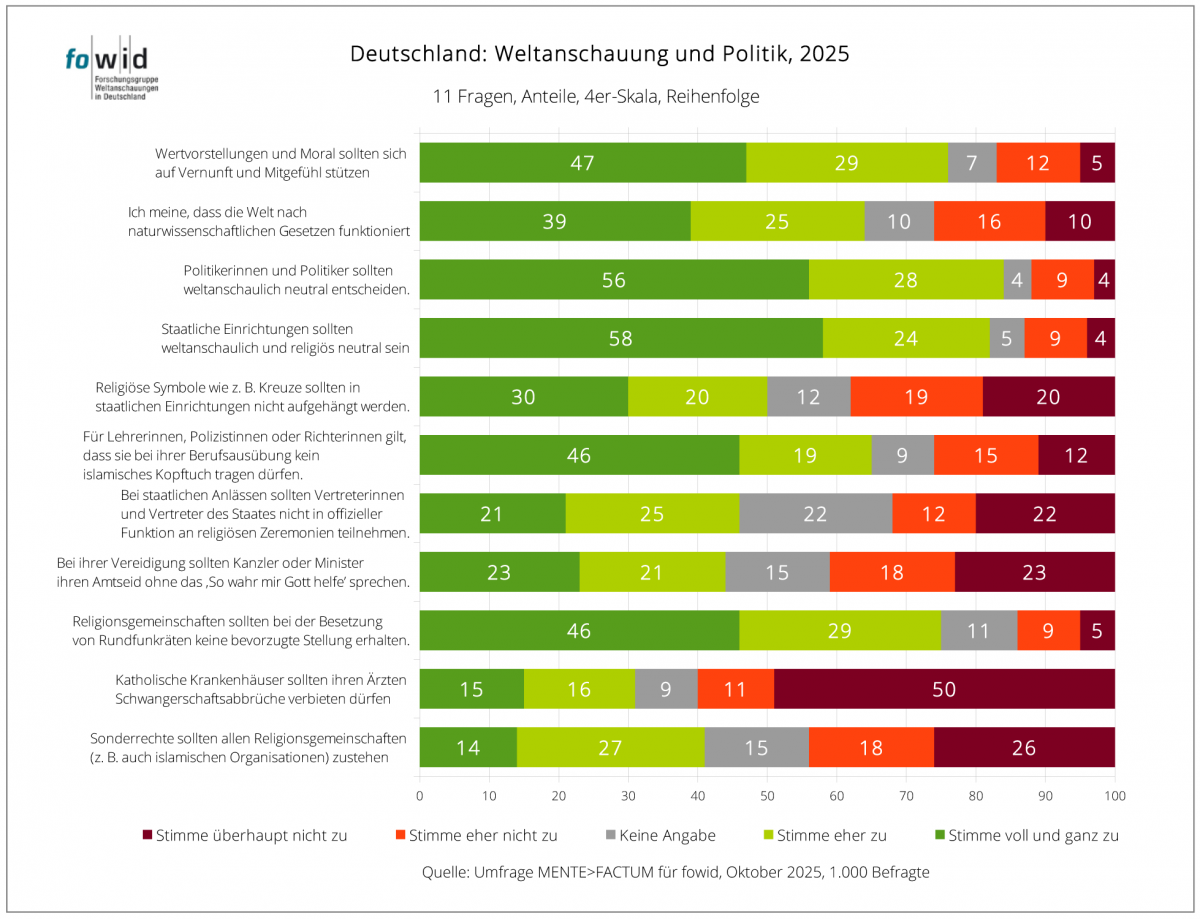
76 percent agreed "fully" (47%) or "rather" (29%) with the conviction that ethical-moral decisions should be based "on reason and compassion," "not on divine commandments." Only 12 percent "rather disagreed" with this statement and 5 percent "disagreed completely," while 7 percent provided no response. "That 76 percent of respondents lean toward a view that can be located more in secular humanism than in the traditional religious communities" is a "remarkable finding," the research group comments. As expected, the greatest approval for this position is found among the non-denominational (85.7%), but the approval rates are also remarkably high among nominal Catholics (66.2%) and especially among Protestants (72.3%). The general secularization trend is "evidently also present within the churches".
A similar picture emerges regarding the approval or rejection of a "naturalistic worldview": 39 percent of respondents "fully" agreed and 25 percent "rather" agreed with the statement "I believe that the world operates according to natural scientific laws. Supernatural forces such as gods or devils have no influence on our world." Only 16 percent spoke "rather" and 10 percent "fully" in favor of rejecting naturalism. This finding is also remarkable, according to the research group: "That only 26 percent attribute an effect in the world to supernatural forces, while 64 percent agree with the naturalistic worldview, suggests that in the shadow of secularization, the fundamental principles of scientific thinking have also gained in significance." As expected, the approval rate is highest among the non-denominational at 77 percent, followed by Protestants at 59 percent and Catholics at 52 percent.
Large majority in favor of the worldview-neutral state
The overwhelming majority of citizens are in favor of a "worldview-neutral state" in which no religious or worldview community is privileged or discriminated against. 84 percent of respondents hold the view that politicians should "not base their decisions on their personal religious convictions" but instead "make decisions in a worldview-neutral manner." 82 percent vote in favor of "state institutions such as courts, schools, or police" being "fundamentally neutral in terms of worldview and religion." 75 percent believe that religious communities should "not receive a preferential position" in the appointment of broadcasting council members. 65 percent oppose the Islamic headscarf worn by teachers in public schools, and 61 percent reject the continued right of the Catholic Church to prohibit medically indicated abortions in its hospitals.
Two further aspects stand out in the study results beyond the high approval for worldview neutrality of the state: 1. Approval of strictly worldview-neutral positions decreases when the personal religious and worldview freedom of officeholders is concerned. Only 44 percent of respondents are in favor of chancellors or ministers not using a religious oath-of-office formula (33 percent have no problem with it whatsoever, 23 percent do not wish to make a statement on the matter). 2. The signs of Christian and Islamic religiosity are, on average, evaluated differently. While 50 percent oppose the hanging of religious symbols such as crosses in schools and courtrooms, the rejection rate is significantly higher in the case of the Islamic headscarf (65 percent).
The fowid analysis on consensus and polarization within the tested groups also yields interesting results: It shows, for example, that the non-denominational, despite their lack of organizational structure, are significantly more homogeneous in their worldview-related attitudes and worldview-political positions than Catholic and Protestant church members, who exhibit large differences on many questions. With regard to the respective party preferences, fowid notes, among other things, that the supporters of the AfD, while appearing extremely united in their rejection of the Islamic headscarf, are unusually strongly polarized on the question of whether the oath of office should take place without reference to God. The research group comments on this finding as follows: "The 'Christian-Occidental' rhetoric of the party finds no consistent counterpart among its supporters – the focus is clearly on the rejection of Islam."
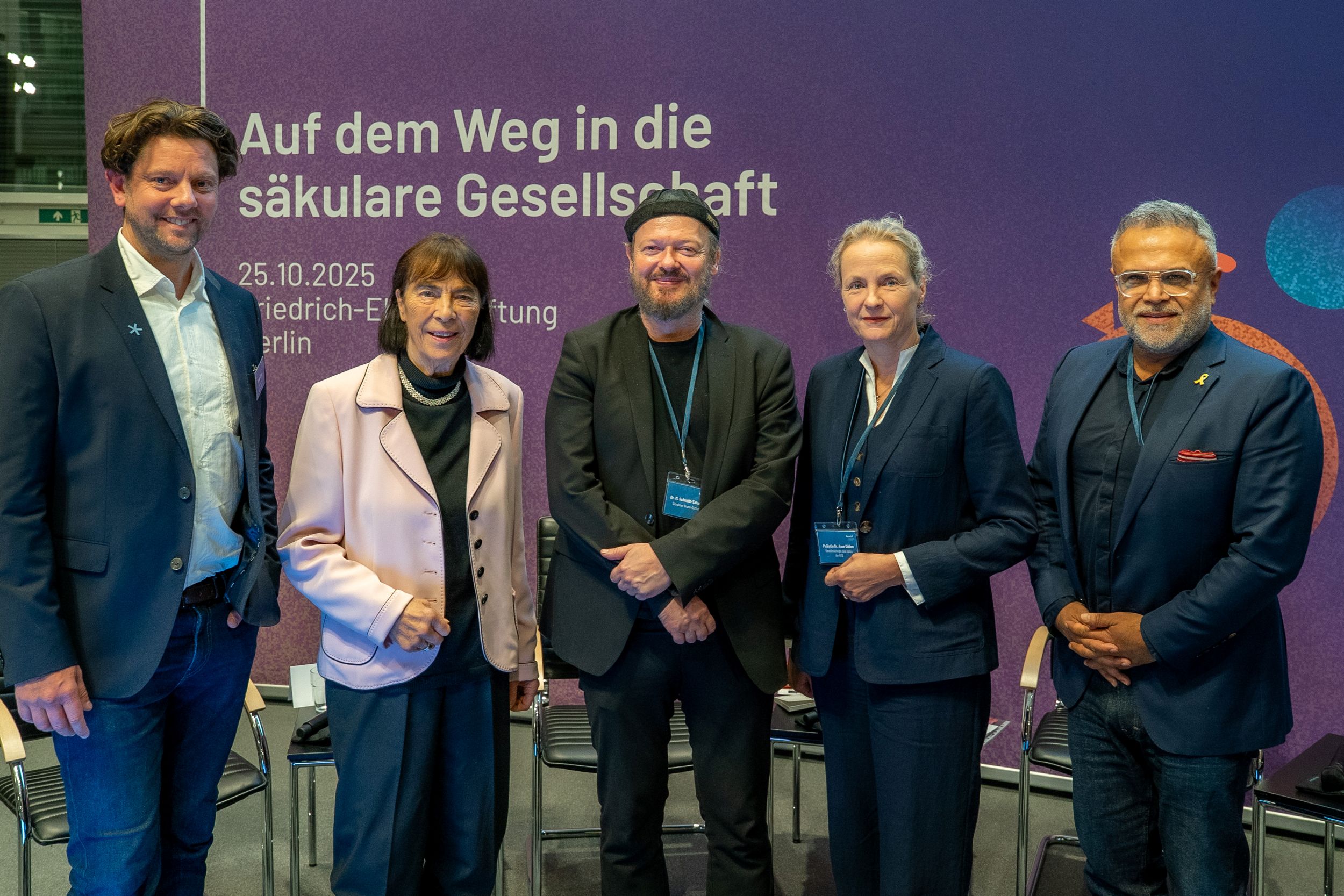
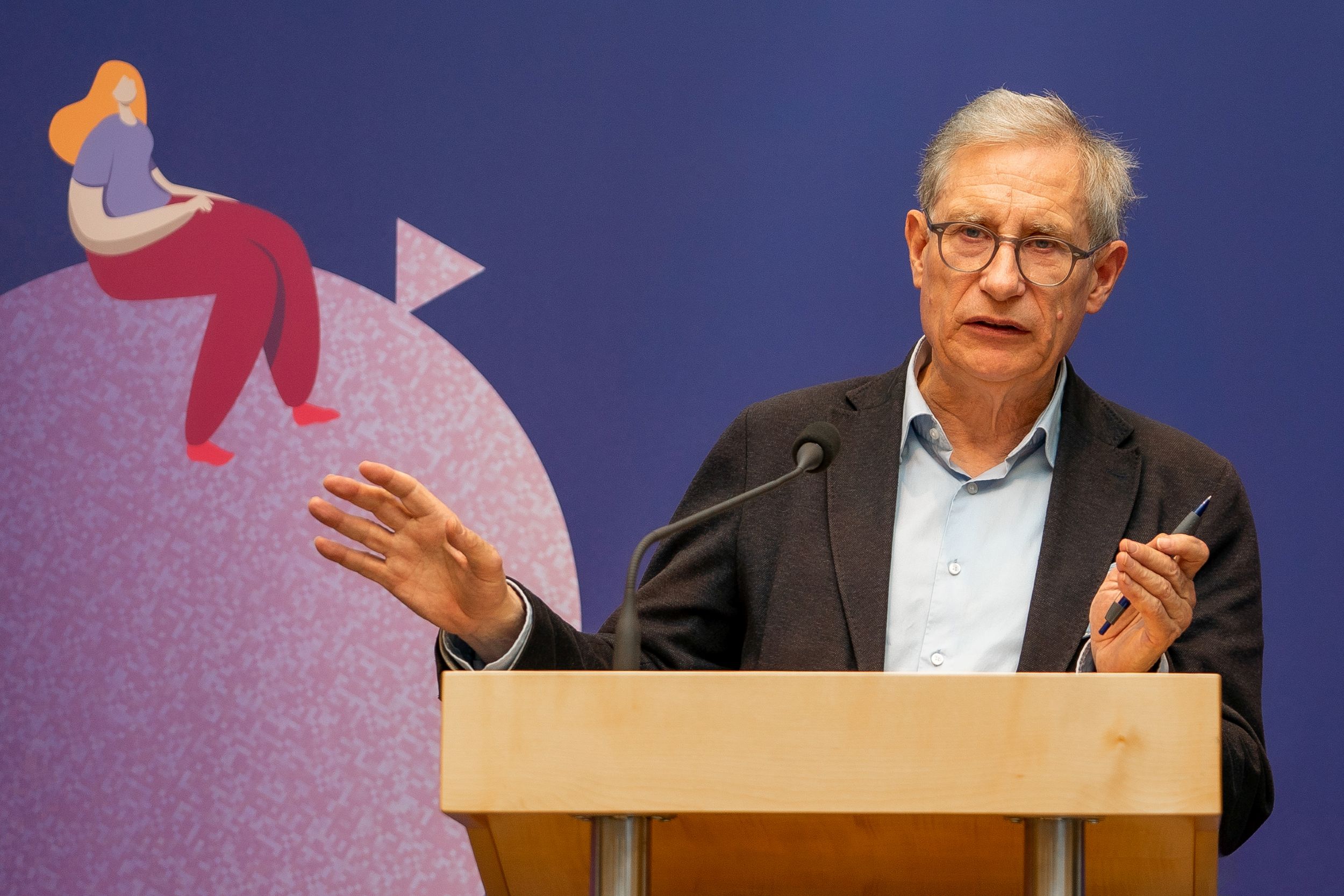
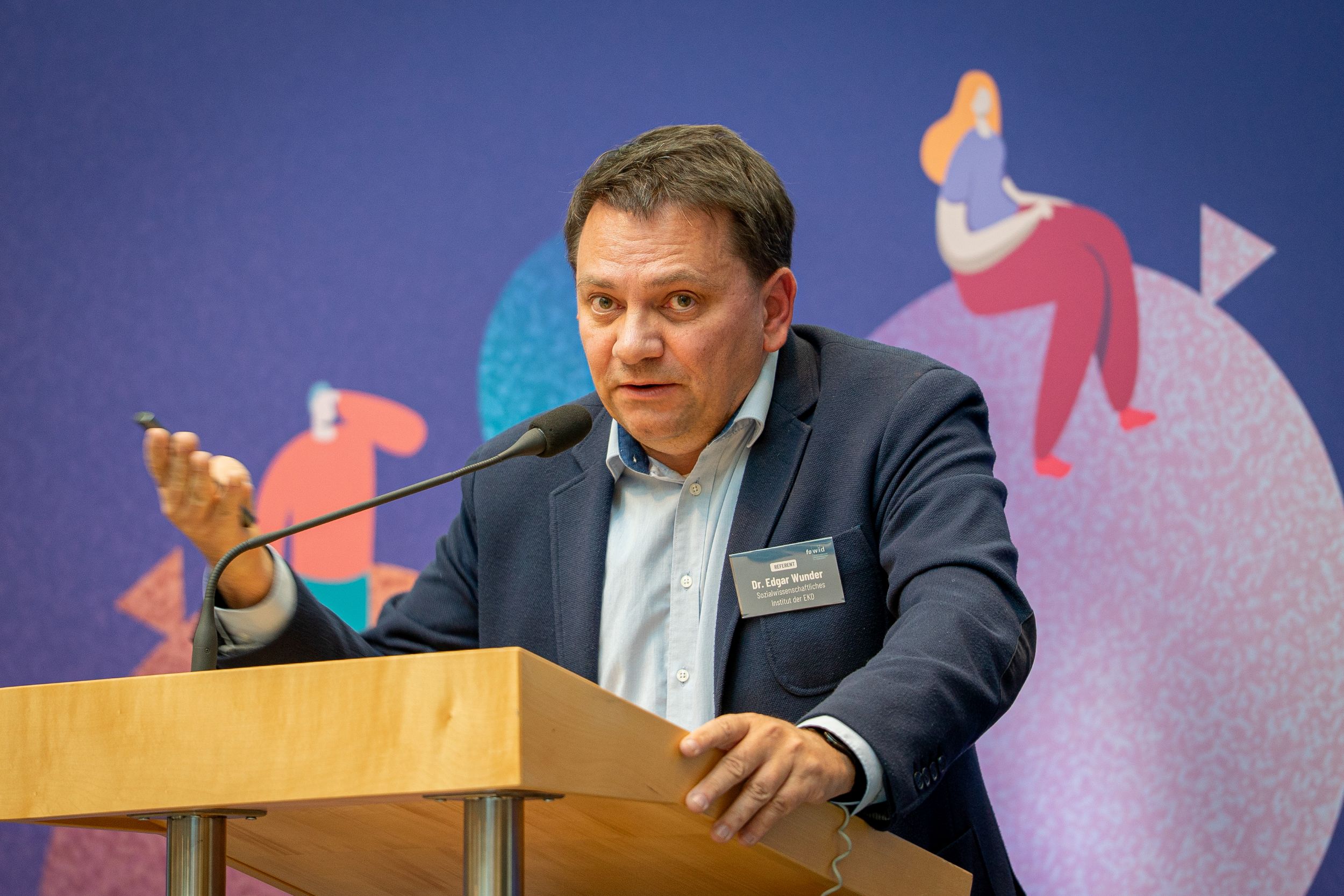
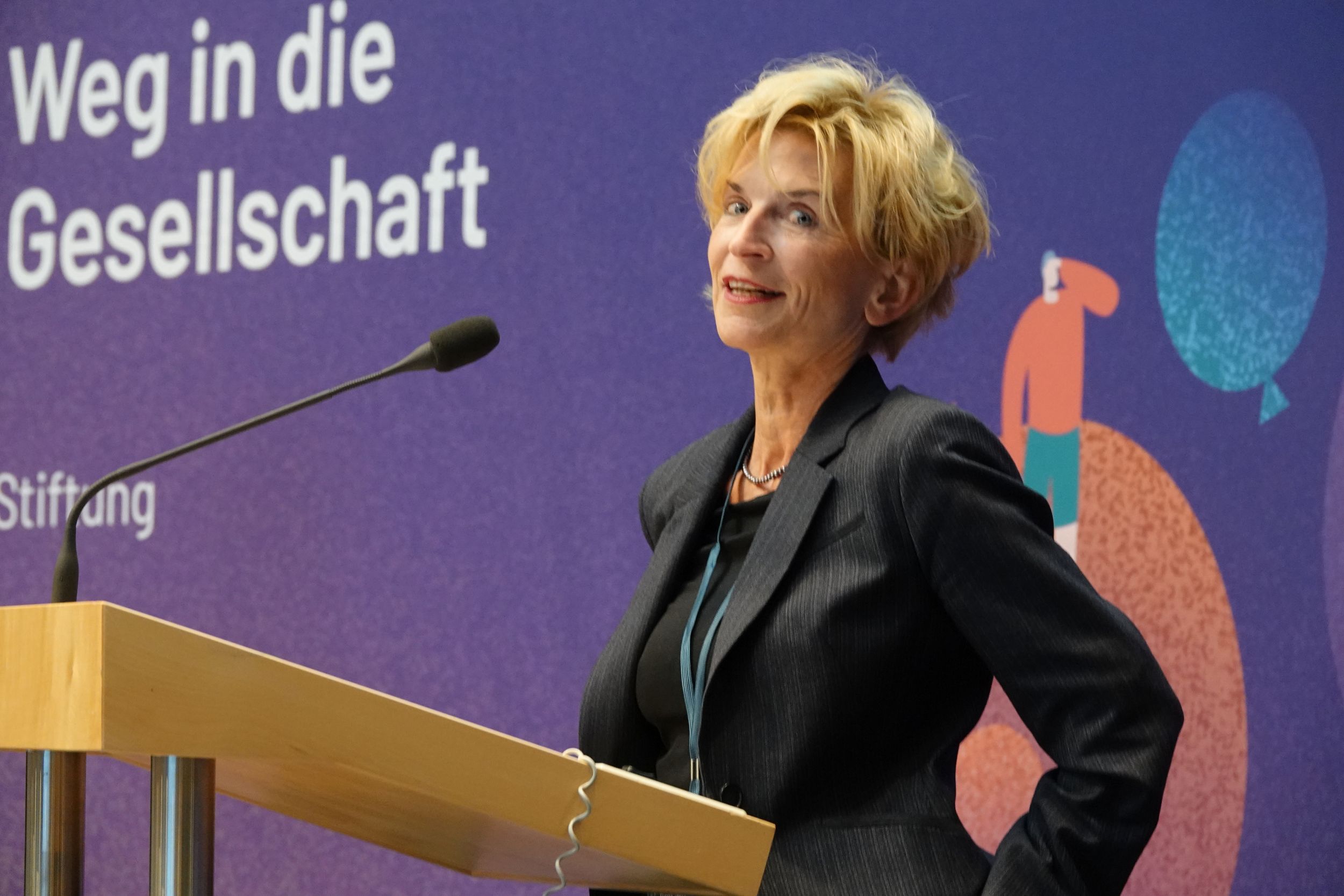
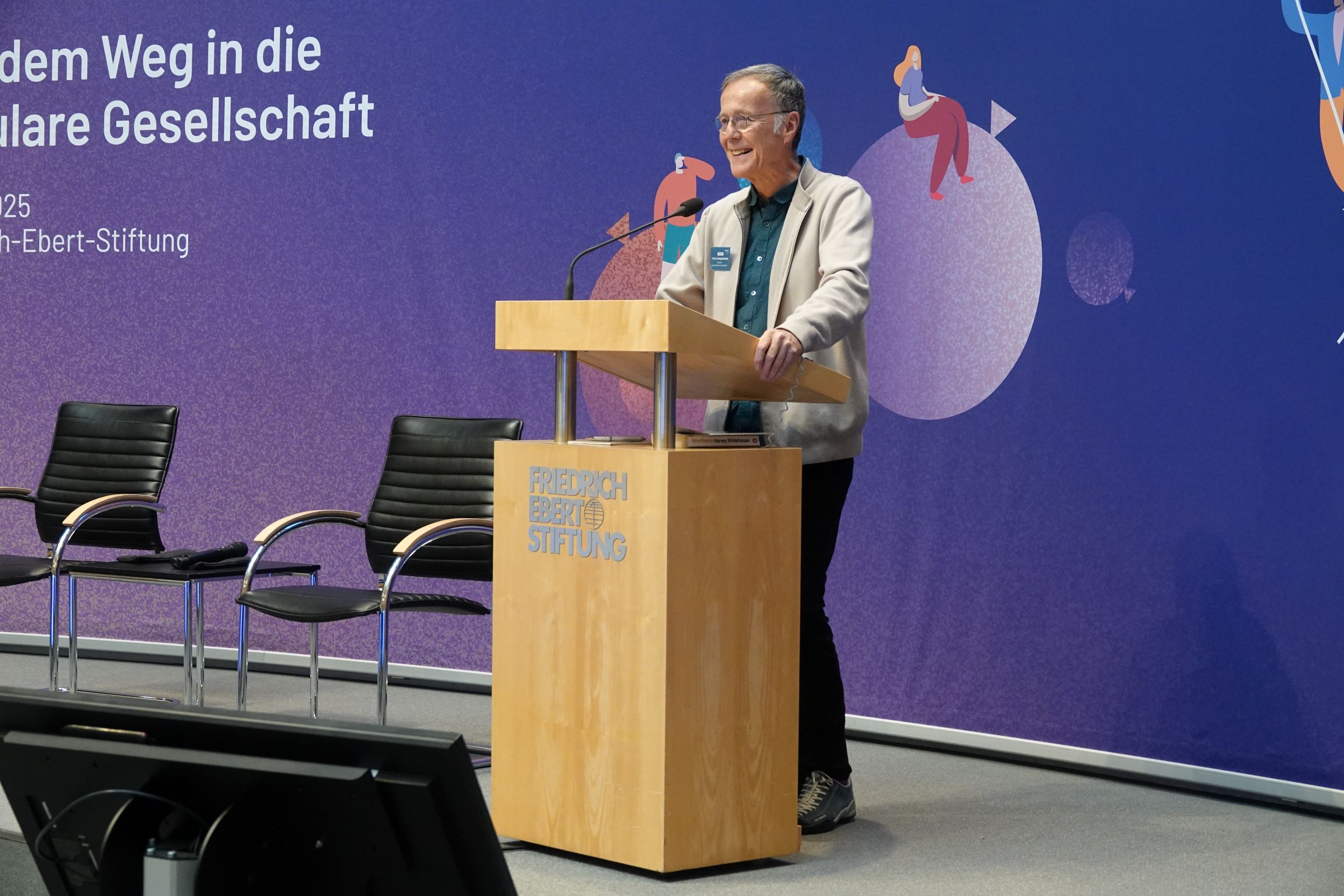
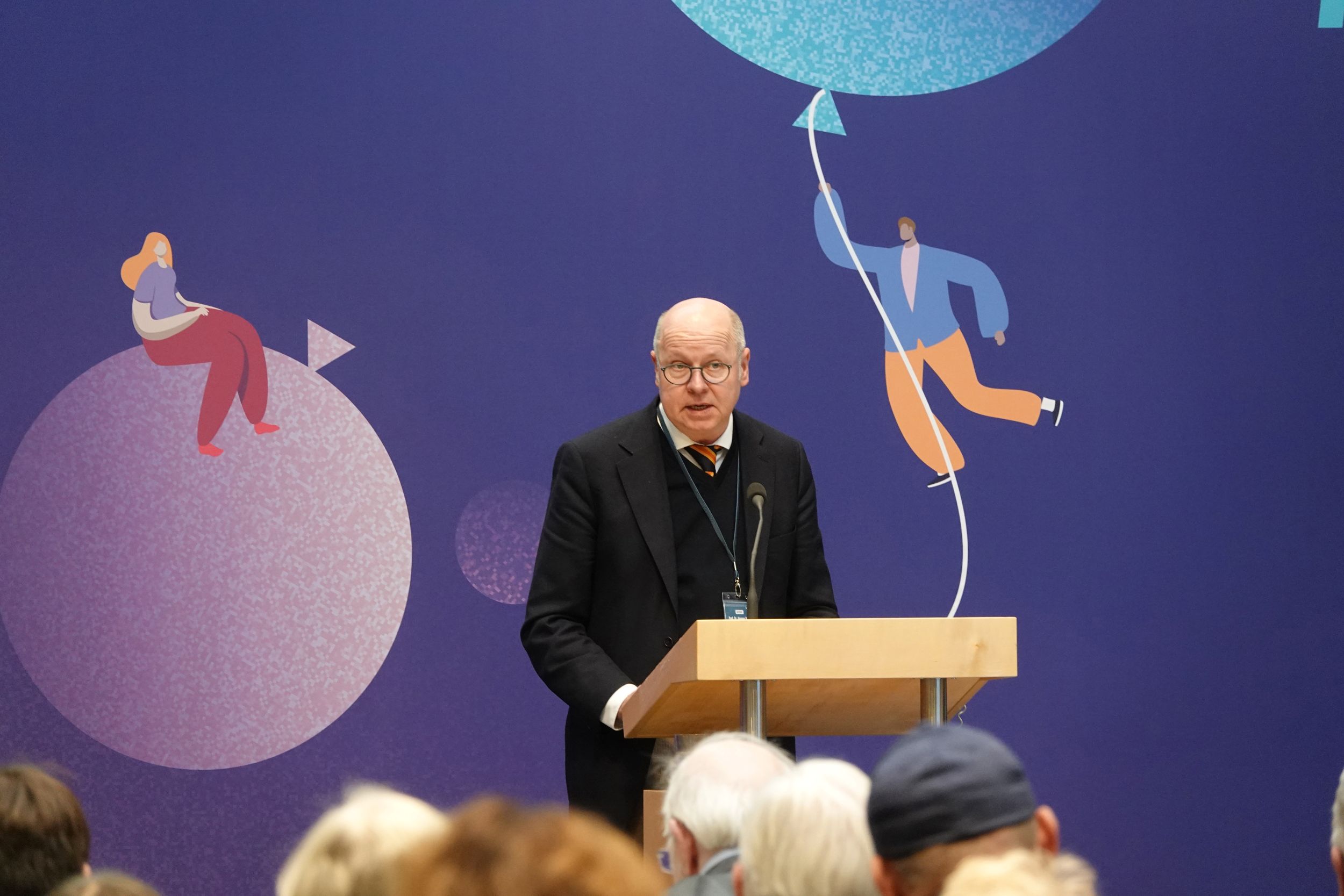
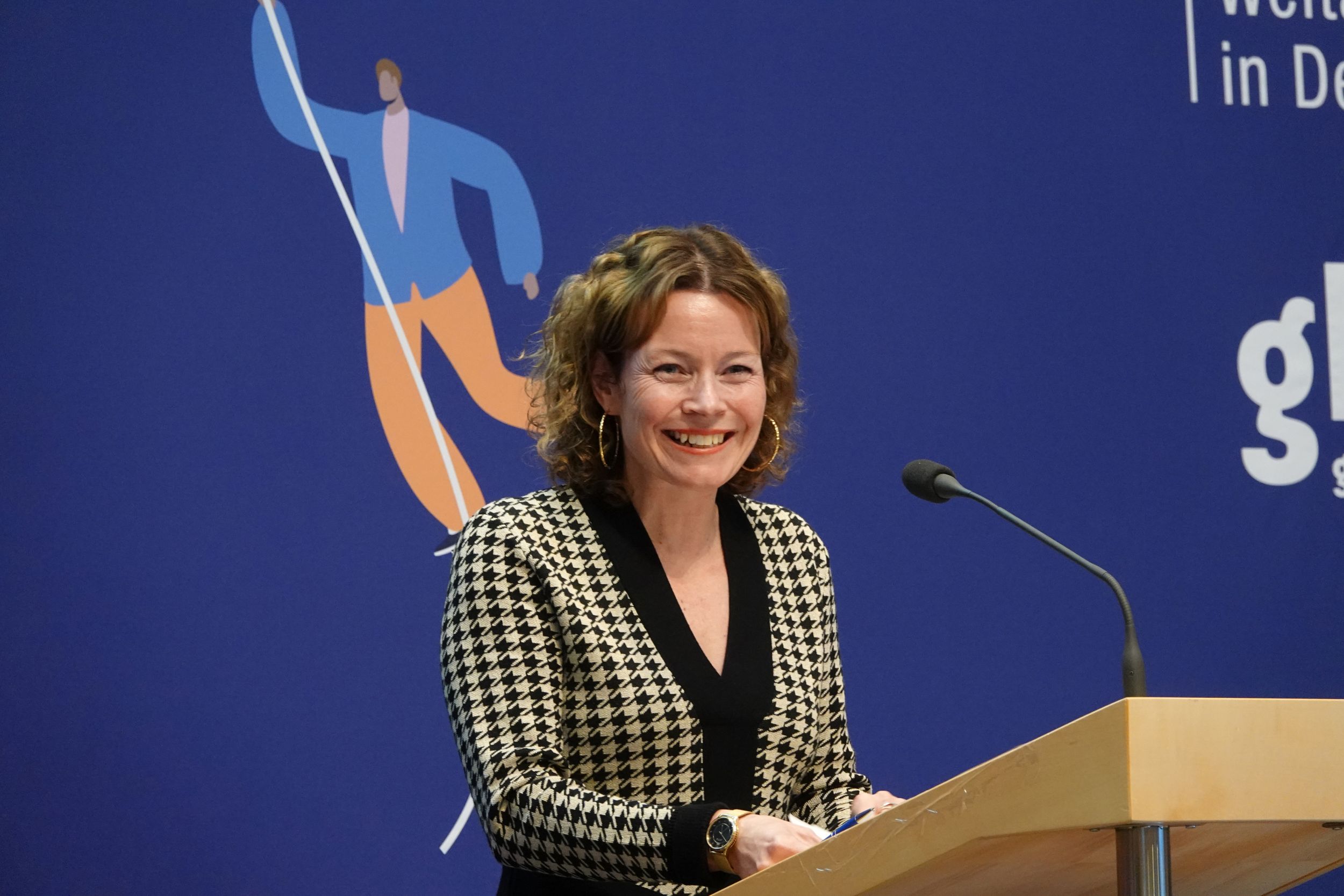
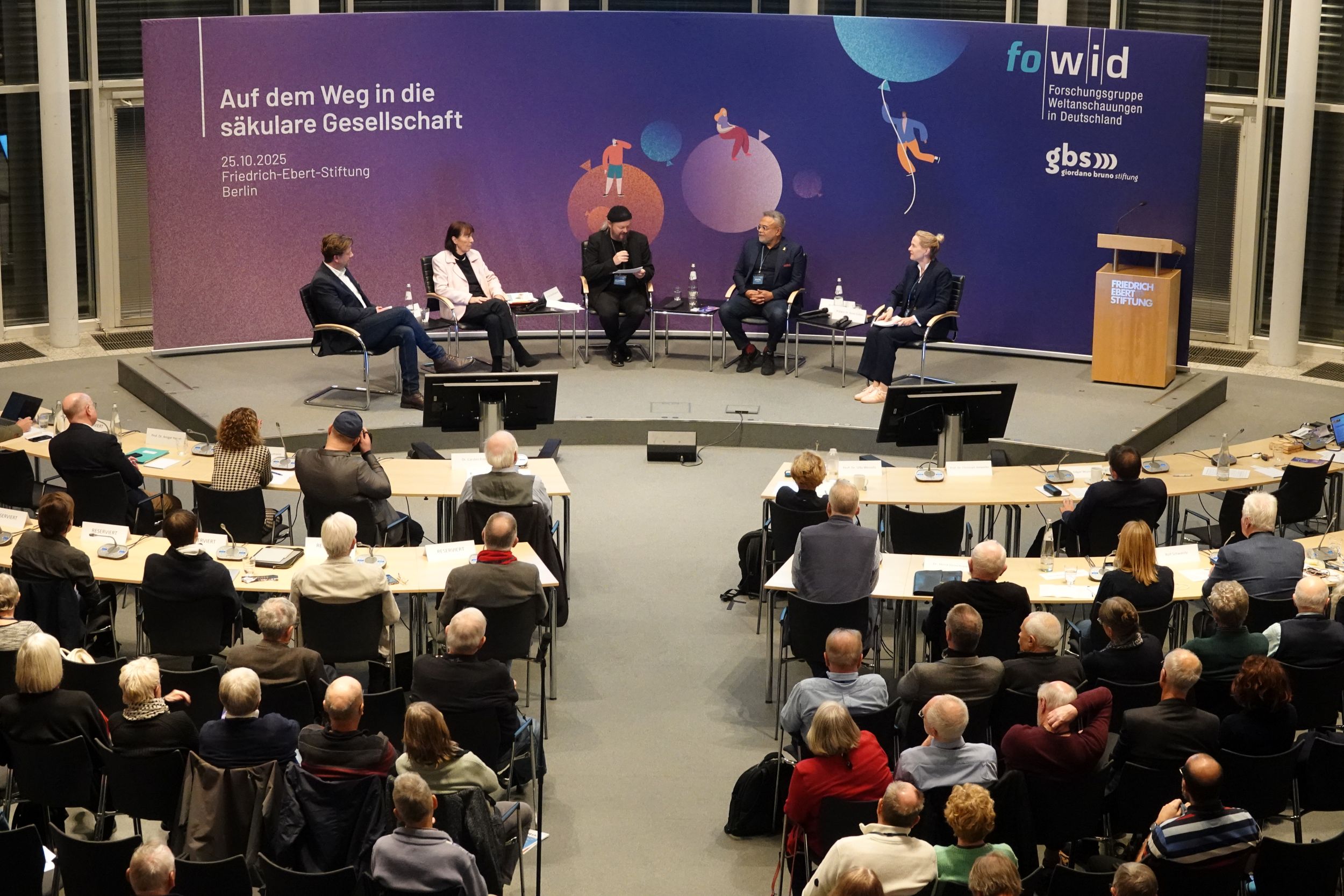
20 years of fowid: Tracing secularization
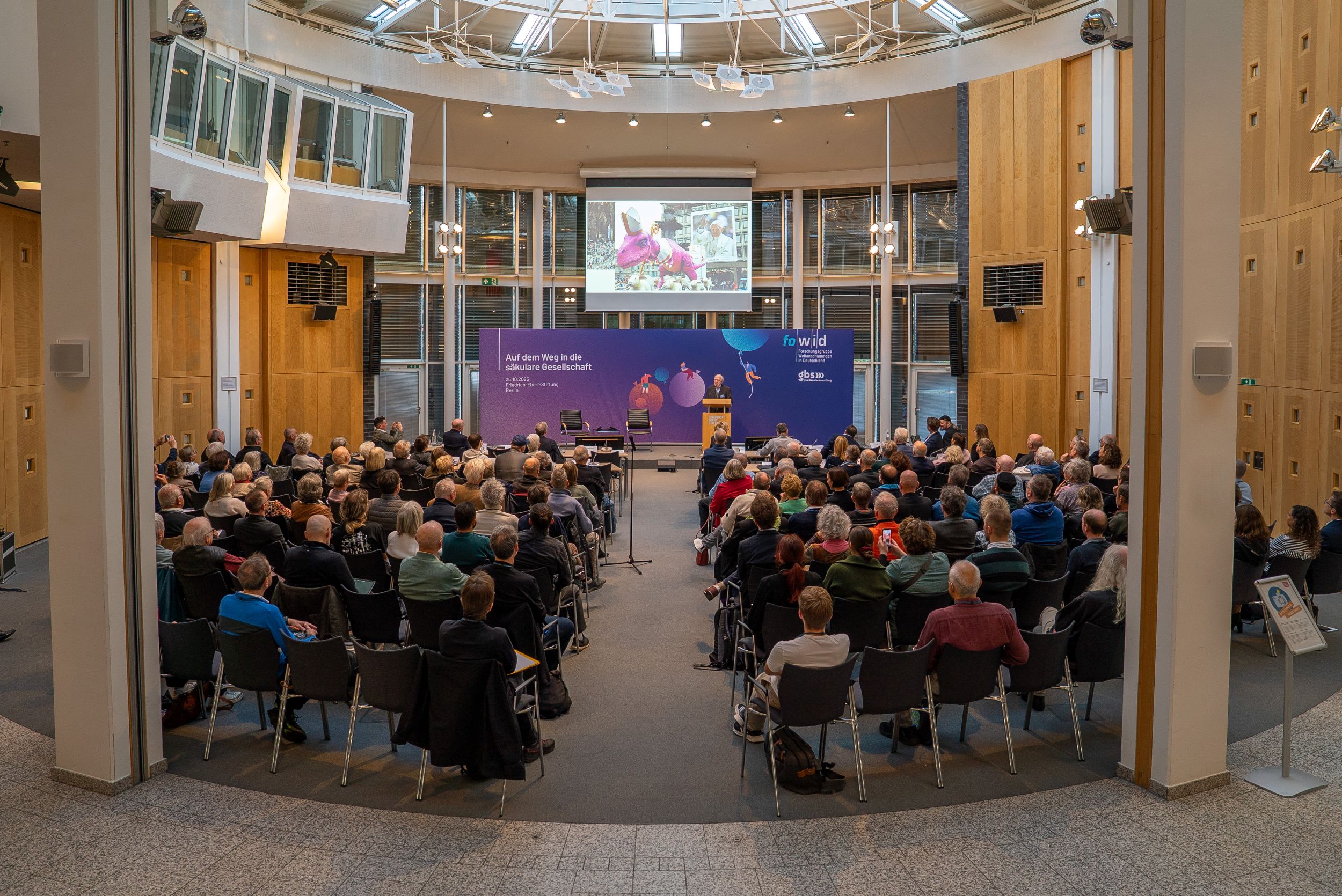
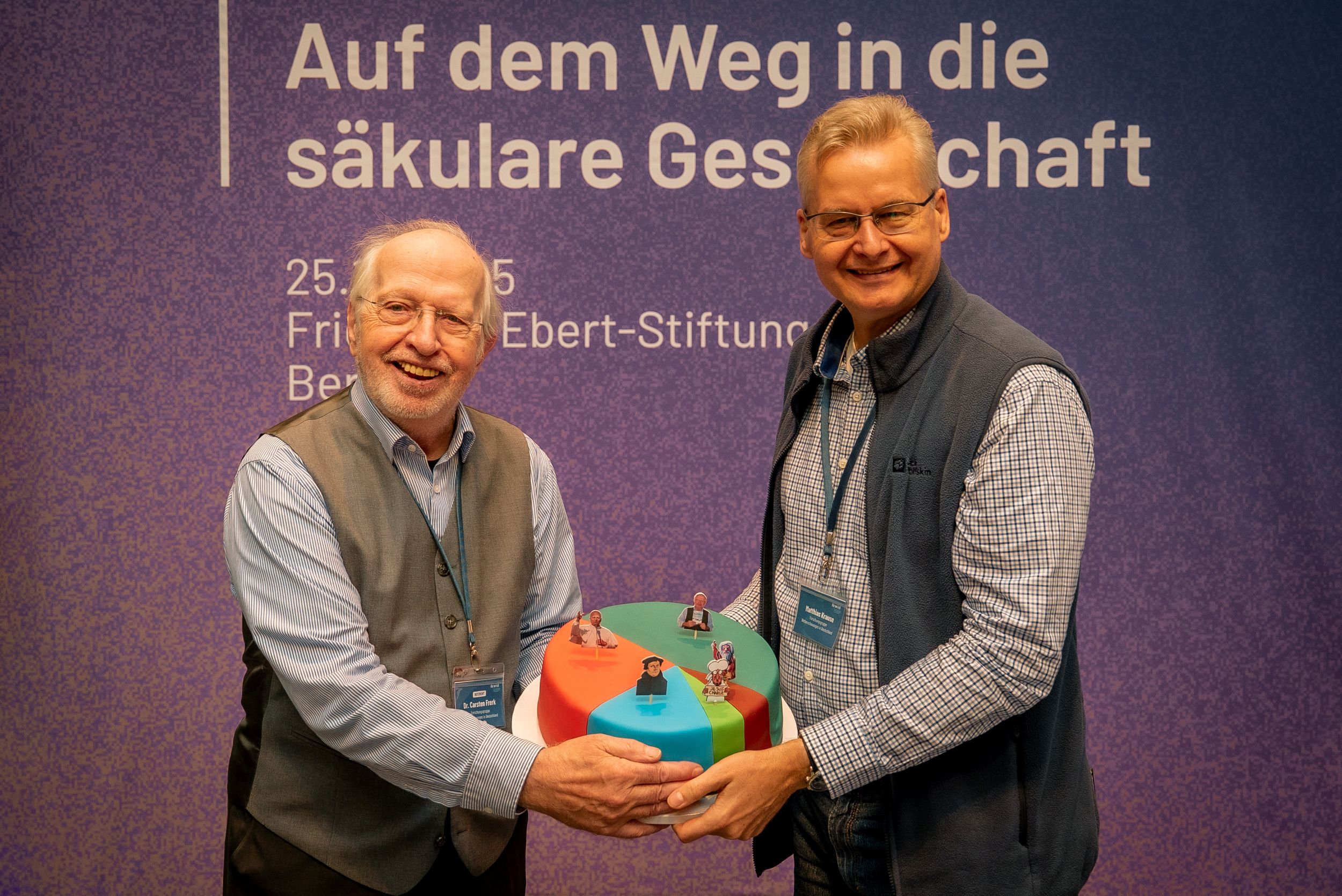
The "Forschungsgruppe Weltanschauungen in Deutschland" (fowid, Research Group on Worldviews in Germany) was founded in 2005 by the Giordano Bruno Foundation (gbs). The research group celebrated its 20th anniversary at the end of October as part of the conference "Auf dem Weg in die säkulare Gesellschaft" (On the Way to a Secular Society) at the Berlin center of the Friedrich Ebert Foundation; see the event report by Gisa Bodenstein for the Humanistic Press Service (hpd).
In his opening lecture at the conference, fowid director Carsten Frerk not only recounted the history of the research group (cf. the article "Auf dem Weg in die säkulare Gesellschaft" in the current "bruno." annual magazine, pp. 26ff.), but also presented the results of a second representative survey that "Mentefactum" had likewise conducted on behalf of fowid in October 2025. In this study, Catholic and Protestant church members were asked whether they, as adults today, would join the Church again. The result is likely to have surprised many, as 53 percent said they would "probably not" (33 percent) or "certainly not" (20 percent) want to join again.
The comparison with a similarly structured study that fowid conducted 20 years earlier is also remarkable. At that time, a strong majority of 62 percent stated that they would join the church as adults as well, while only 35 percent said they would not. The 2025 study results made it into the major German media outlets shortly after Frerk's Berlin lecture on October 25 (see, among others, "ZEIT" and "ZDF-heute"), and church-affiliated portals also picked up the report (see, among others, "domradio" and "katholisch.de").
The (alleged) social services of the churches
In a later question of the same study, two thirds of church members (66 percent) stated they would "certainly" (33 percent) or "probably" (also 33 percent) leave the church if the churches "spend little or almost nothing of the church tax on social purposes." This attitude is "astonishing in view of the churches’ real social investments", says the chairman of the Giordano Bruno Foundation, Michael Schmidt-Salomon: "Apparently, most church members have not even noticed that the churches actually spend 'little' (denominational daycare centers) or 'almost nothing' (denominational hospitals) on social purposes." In his view, this knowledge deficit has also influenced the answering of the questions in the current fowid study: "Presumably, significantly more than 61 percent of respondents would vote against the rigorous abortion ban in Catholic hospitals if they knew that the churches do not invest a single cent, apart perhaps fom the maintenance of the hospital chapel, in the operation of 'their' hospitals. These are, after all, financed 100 percent by public funds and insurance contributions."
As Schmidt-Salomon explains, "very few citizens and also very few politicians know that the welfare state would by no means collapse economically if the churches were to withdraw from this area." fowid director Carsten Frerk already pointed out the fundamental errors of the so-called "Caritas legend" two decades ago in his books "Finanzen und Vermögen der Kirchen in Deutschland" (Finances and Assets of the Churches in Germany) and "Caritas und Diakonie in Deutschland" (Caritas and Diakonie in Germany). The full deductibility of the church tax alone results in tax revenue losses for the state of 4.5 billion euros per year – more than four times the amount that the churches spend on social purposes.